Chemical GHS hazard labels
Chemical manufacturers, repackers and traders; hazard labels (pictograms, signal words, hazard statements) on drums, cans and bottles.
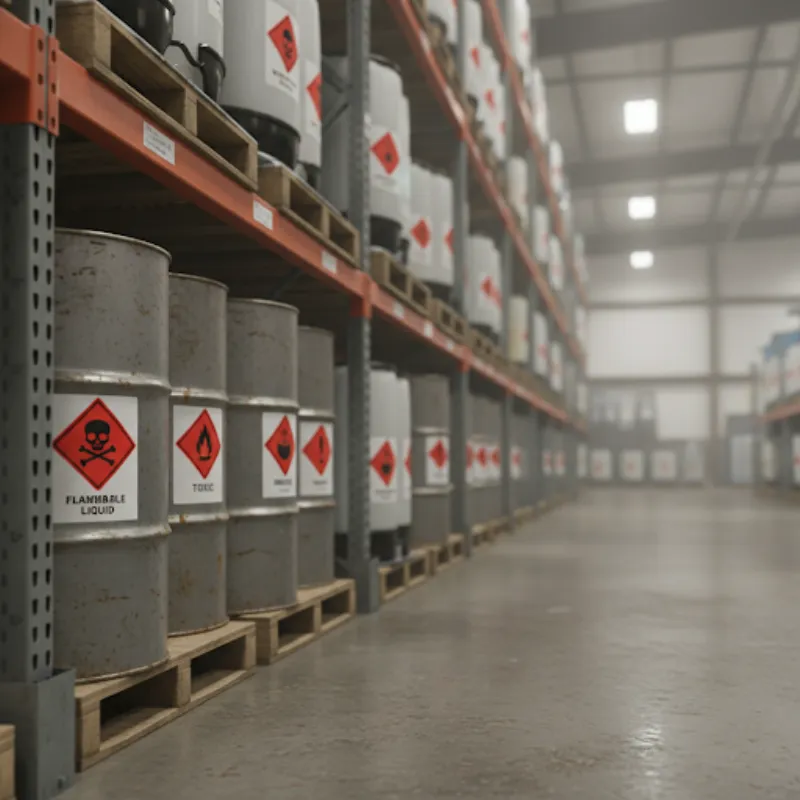
Recommended combinations
| Situation | Label material | Ribbon type | Adhesive |
|---|---|---|---|
| Ordinary indoor containers | Synthetic material (PP / PE) | Resin | Permanent |
| Exposed to solvents or oils | PET or chemical-resistant synthetic | Resin | As specified for the material |
| Drums shipped overseas by sea | Material tested to BS 5609 Part 2 | Resin ribbon specified for the material (Part 3) | As specified for the material |
Recommended combinations are general guidance; always confirm with a test print.
Why this combination
Chemical labels often get splashed and wiped; paper labels fall apart and ordinary ribbon print is wiped off by solvents. Synthetic materials with resin ribbon resist solvents and abrasion better.
Drums of chemicals shipped by sea are often required to have labels that remain legible after three months in seawater, and the industry commonly proves this with the British BS 5609 standard: Part 2 tests the label material and adhesive (including three months of seawater immersion), and Part 3 tests the print made by "printer + ribbon + material". So to meet BS 5609, the material and ribbon must be chosen together.
Common sizes
100×100 mm, 100×150 mm, 150×200 mm and up (large drums). If you need red diamond frames, use labels with pre-printed red frames or a color-capable printer (ask separately).
What to watch out for
- Chemical labeling in Taiwan follows the Regulations for the Labeling and Hazard Communication of Hazardous Chemicals and the CNS 15030 series; the label size, content and pictograms are decided by the customer under the regulations, and we supply printable, durable materials.
- BS 5609 is not a requirement of GHS itself; check with your customer or shipping rules whether you need it.
- Monochrome thermal transfer cannot print red frames—either use labels with pre-printed red frames or ask about a color solution.
- Different solvents affect materials differently; tell us which chemicals the label will contact, and test-apply and test-wipe first.
Not suitable for
For labels that must be immersed in strong solvents for long periods, please ask first. For chemical containers stored at low temperatures, see: Low-temperature labels
Information to include in your inquiry
- Printer brand and model (or "haven't bought one yet")
- Label width × height (mm), labels per roll or total quantity needed
- What surface it goes on (carton, plastic, metal, glass, fabric…)
- How long the label must last and what it will be exposed to (freezing, water, alcohol, sunlight, heat…)
- Photos of the labels or ribbons you use now (if any)
- The chemicals it will contact, the container material (steel drum, plastic drum, glass bottle), whether it is shipped by sea, and whether red frames should be pre-printed.