02-2886-6633·LINE @barcodehub·sales@junji.com.tw
English

Low-temperature labels

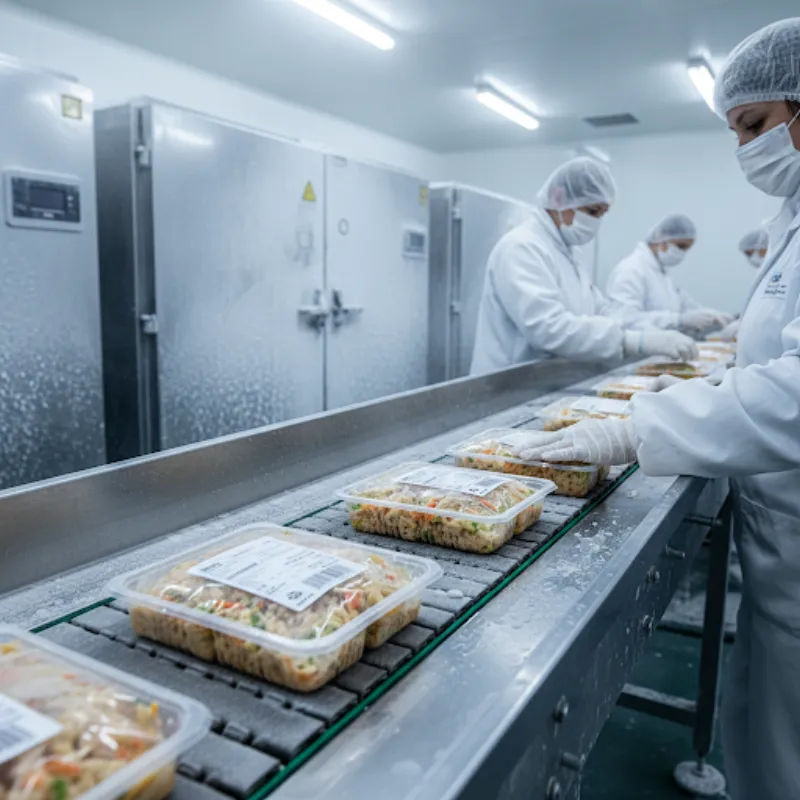
From refrigerated and frozen down to -196°C liquid nitrogen, labels must stick, stay on and keep their print legible.

Ask how it's applied firstHow cold it is at application matters more than how cold it is stored
Match the setChoose freezer-grade adhesive, synthetic material and ribbon together
Supplied togetherLabels supplied with a matched ribbon

The most important question: how are your labels applied?

An adhesive has two temperatures: the "minimum application temperature" and the "service temperature" after application. Be clear about how labels are applied first, so the right material is chosen.

Applied at room temperature, then chilled

Scenario
Labeled at room temperature on the packing line, pressed firmly, left to rest, then refrigerated or frozen
Check
Service temperature range
Tip
Let the label rest a while so the adhesive bonds before chilling

Applied to items that are already cold

Scenario
Product is already frozen, frosted or sweating when labeled
Check
Minimum application temperature
Challenge
Frost and a film of water separate the adhesive from the surface; it looks stuck but falls off at the slightest movement
Dry-ice and liquid-nitrogen grade materials mostly need to be applied at room temperature before chilling. If you must apply them cold, be sure to tell us first.

Temperature grades at a glance

Listed from cold to colder. Temperatures are typical industry storage temperatures, not the specs of a single product. Give us your minimum temperature and application method, and we will recommend based on material specifications.

  1. 1
    RefrigeratedThe problem isn't the cold, it's condensation
    About 2–8°C, often with condensation
    Synthetic material + refrigerator-grade or moisture-resistant adhesive + wax-resin or resin ribbon. Thermal paper can be used for short-term date labels.
  2. 2
    Frozen, blast-frozenFrom standard freezers to blast-freeze tunnels, with repeated moves in and out
    About -18°C to -40°C, repeatedly in and out
    Synthetic material + freezer-grade adhesive + resin or wax-resin ribbon.
  3. 3
    Ultra-low temperature freezers, dry iceLab ultra-low freezers, dry-ice shipping
    About -80°C (dry ice about -78°C)
    Dedicated ultra-low temperature material + ultra-low temperature adhesive + resin ribbon; usually applied at room temperature before chilling.
  4. 4
    Liquid nitrogenVapor or liquid phase storage, repeated warming
    -196°C, vapor or liquid phase
    Dedicated liquid nitrogen material + ultra-low temperature adhesive + resin ribbon, with label and ribbon supplied together. Small tubes often use a wrap-around label that covers the printed area.

How to choose for each temperature grade

1

Refrigerated

About 2–8°C, often with condensation

Typical situations at this grade

Items in a cold room or refrigerator are not very cold; the real trouble is moving in and out. Taken from the refrigerator to room temperature, the surface immediately beads with water: paper labels absorb it and wrinkle, the adhesive loses tack on the wet surface, and the print smears at the touch of a hand.

Common uses: where it goes and what it does

  • Dairy bottles, fresh milk: labeled on the line, refrigerated, moved in and out repeatedly before reaching the shelf
  • Date labels for fresh produce, boxed meals and fresh food: short-term use, but must not be blurred by moisture
  • Refrigerated logistics cartons, cold-room location labels: large temperature swings, condensation every day

Recommended approach

Synthetic material + refrigerator-grade or moisture-resistant adhesive + wax-resin or resin ribbon. Thermal paper can be used for short-term date labels.

How standard labels fail

Paper absorbs water and wrinkles; adhesive loses tack on wet surfaces; print smears when rubbed.

When requesting a quote, tell us: temperature, whether there are water droplets or condensation, container material and curvature, and how many days in storage.

2

Frozen, blast-frozen

About -18°C to -40°C, repeatedly in and out

Typical situations at this grade

Labels are applied on the packing line, the product goes into a blast-freeze tunnel or freezer, then sits in a frozen warehouse for months, followed by repeated freezing and thawing during shipping, delivery and at the store. Standard adhesive hardens and loses tack below zero, the corners lift, and the paper disintegrates when thawed. Seafood is even harder: fish boxes are often covered in ice water and frost, and labels simply won't stick.

Common uses: where it goes and what it does

  • Outer bags for frozen prepared foods and frozen meat: applied at room temperature, then frozen
  • Seafood and fish boxes: must stick to surfaces with ice water and frost
  • Ice cream cartons, frozen-warehouse pallet and location labels: scanned long-term inside the freezer
  • Low-temperature chemical storage containers: must stay legible stored below zero

Recommended approach

Synthetic material + freezer-grade adhesive + resin or wax-resin ribbon.

How standard labels fail

Adhesive hardens and loses tack; corners lift or the whole label falls off; paper disintegrates when thawed.

When requesting a quote, tell us: minimum temperature, whether labels are applied at room temperature or onto frozen products, packaging material, and number of freeze-thaw cycles.

3

Ultra-low temperature freezers, dry ice

About -80°C (dry ice about -78°C)

Typical situations at this grade

Biotech labs store samples in -80°C ultra-low freezers or ship them on dry ice. The moment a cryovial is taken out, its surface frosts over, and this is when labels most easily slide off. Cryovials are also thin, so the label must wrap around a small curve. Materials at this grade are mostly applied at room temperature before going into the freezer.

Common uses: where it goes and what it does

  • Cryovials, centrifuge tubes, sample boxes: long-term storage at -80°C, taken in and out
  • Reagent and enzyme bottle labels: often wiped with alcohol
  • Outer labels on dry-ice shipping boxes: must scan in transit
  • Ultra-low temperature storage of special materials and chemicals

Recommended approach

Dedicated ultra-low temperature material + ultra-low temperature adhesive + resin ribbon; usually applied at room temperature before chilling.

How standard labels fail

Standard freezer adhesive also fails at this grade; frost makes labels slide off; print is abraded by frost.

When requesting a quote, tell us: storage temperature, container (cryovial diameter, box, bag), whether labels are applied while cold, and whether they will contact alcohol.

4

Liquid nitrogen

-196°C, vapor or liquid phaseKey point

Typical situations at this grade

Cells and strains are stored long-term in liquid nitrogen tanks in two ways: "vapor phase" means in the vapor above the liquid nitrogen, and "liquid phase" means directly immersed in -196°C liquid nitrogen, which is the harshest. Each time a sample is taken out, the cryovial instantly frosts and gathers condensation, then freezes again when put back. These repeated hot-cold cycles make standard labels brittle so they pop off, or fall off after warming.

Common uses: where it goes and what it does

  • Cryovials for cells, strains and tissue culture: biotech R&D, food and fermentation strain banks
  • Germplasm storage tubes for crop and livestock breeding
  • Sample banks in biotech and general labs: must still scan years later

Recommended approach

Dedicated liquid nitrogen material + ultra-low temperature adhesive + resin ribbon, with label and ribbon supplied together. Small tubes often use a wrap-around label that covers the printed area.

How standard labels fail

Adhesive turns brittle instantly in liquid nitrogen and the whole label pops off; lifted corners let liquid nitrogen seep in; print is abraded by frost; labels fall off after warming and condensation.

When requesting a quote, tell us: vapor or liquid phase, whether labels are applied while cold, container type and diameter, storage period, number of warm-ups, whether they will contact alcohol, and whether they are autoclaved first.

How we match it

Low-temperature labels come down to three things: whether the adhesive sticks and holds; whether the material can handle moisture; whether the ribbon print resists frost and abrasion. Tell us your storage method and how labels are applied, and we will match the whole set.

Freezer-grade adhesiveTwo types: "apply at room temperature, then freeze" and "apply to an already frozen surface". We ask first, then match.
Synthetic materialUnaffected by condensation and frost, and does not disintegrate when thawed.
Matched ribbonResin or wax-resin ribbon; print resists frost abrasion and rubbing.

Why standard labels don't work

  • Standard adhesive hardens and loses tack at low temperatures, so labels lift or fall off entirely.
  • Refrigerated and frozen goods moving in and out gather condensation and frost; paper labels absorb water and disintegrate, and wax print is abraded by frost.
  • Small curves (tubes, bottles) plus low temperatures make corners most likely to lift.

Industry applications

Find the industry closest to yours, and include the "Tell us" items when you request a quote.

1

Frozen food / seafood

Frozen and blast-frozen

  • Outer bags for frozen meal kits and frozen meat: applied at room temperature, then frozen; no direct food contact
  • Seafood boxes and styrofoam boxes: must stick even with ice water and frost on the surface
  • Portion bags for blast-frozen shrimp and fish fillets
  • Outer bags for semi-finished products such as dumplings, glutinous rice balls and frozen dough
  • Packaging and cartons for frozen produce (edamame, taro, berries)
Conditions, recommendations and quote checklist
Conditions
Long-term storage in freezers at about -18°C or below; seafood often has ice water and frost.
Recommendation
Synthetic material + freezer-grade adhesive + resin or wax-resin ribbon. If labeling after freezing, please say so specifically.
Tell us
Minimum temperature, whether labeled before freezing or onto frozen products, packaging material, and contact with ice water.
2

Cold chain logistics / frozen warehousing

Refrigerated; frozen and blast-frozen

  • Frozen-warehouse pallet and location labels: scanned long-term inside the cold room
  • Shipping labels for cartons, totes and roll cages
  • Order labels for freezer-truck delivery, seal labels for styrofoam boxes
  • Sorting labels at refrigerated consolidation centers
  • Parcel labels for cold-chain home delivery: repeated condensation in transit
Conditions, recommendations and quote checklist
Conditions
In and out of refrigerated and frozen rooms; condensation from temperature changes.
Recommendation
Synthetic paper + freezer-grade adhesive + wax-resin or resin ribbon.
Tell us
Refrigerated or frozen, applied to stretch wrap, cartons or plastic crates, and how long they must last.
3

Ice cream / dairy / beverages

Refrigerated; frozen and blast-frozen

  • Date labels on bottles of fresh milk, yogurt and fresh juice
  • Ice cream tubs, ice pop cartons
  • Refrigerated prep labels for bubble tea and coffee shops
  • Cup labels for refrigerated desserts such as soy milk and pudding
  • Ingredient drum markings in cold rooms
Conditions, recommendations and quote checklist
Conditions
Ice cream frozen; dairy refrigerated with heavy condensation.
Recommendation
Synthetic material + freezer-grade or moisture-resistant adhesive + resin ribbon.
Tell us
Container material and curve diameter, exposure to condensation, hand or machine application.
4

Meat / slaughter and processing

Refrigerated; frozen and blast-frozen

  • Vacuum bag and tray pack labels for cut meat
  • Hanging traceability tags for carcasses and half carcasses of pork and beef
  • Batch labels in refrigerated aging rooms
  • Frozen meat cartons, export cartons
  • Markings on raw material bins and carts in the processing plant
Conditions, recommendations and quote checklist
Conditions
Refrigerated or frozen; surfaces often have water and fat.
Recommendation
Synthetic material + freezer-grade or moisture-resistant adhesive + resin ribbon.
Tell us
Vacuum bags or cartons, presence of fat or moisture, refrigerated or frozen, and whether labels are applied at high speed.
5

Central kitchens / catering

Refrigerated; frozen and blast-frozen

  • Product name and date labels for blast-frozen cooked food and meal prep boxes
  • Opening-date labels for refrigerated prep containers and food storage boxes
  • Traceability labels for catering and airline meal boxes
  • Batch labels for frozen soup bases and sauce bags
Conditions, recommendations and quote checklist
Conditions
Cooked food blast-frozen and meals prepped under refrigeration; in and out every day.
Recommendation
Synthetic material + freezer-grade or moisture-resistant adhesive; thermal paper can be used for short-term date labels, use thermal transfer for long-term.
Tell us
Refrigerated or frozen, plastic boxes or bags, how many days stored, how many labels per day.
6

Agricultural products / precooling at origin

Refrigerated; frozen and blast-frozen

  • Collection crate labels in precooling rooms after harvest
  • Production history and batch traceability labels: visible from cold storage to the store
  • Cartons for frozen processed produce (edamame, taro, sweet potato)
  • Bunch labels for refrigerated flower transport
Conditions, recommendations and quote checklist
Conditions
Post-harvest precooling, refrigerated consolidation; crate surfaces often gather condensation.
Recommendation
Synthetic paper + moisture-resistant or freezer-grade adhesive + wax-resin ribbon.
Tell us
Refrigerated or frozen, cartons or plastic baskets, exposure to water spray.
7

Chemicals / low-temperature raw material storage

Frozen and blast-frozen; ultra-low temperature and dry ice

  • Reagents, catalysts and raw material drums stored at low temperatures
  • Refrigerated or frozen chemical containers (for GHS content, see chemical labels)
  • Batch labels for raw materials used in low-temperature reactions
Conditions, recommendations and quote checklist
Conditions
Depends on the product; frequent contact with solvents.
Recommendation
Synthetic material + low-temperature adhesive + resin ribbon.
Tell us
Minimum temperature, chemicals it will contact, container material.
8

Biotech / laboratory samples

Ultra-low temperature and dry ice; liquid nitrogen

  • Cryovials, centrifuge tubes: long-term storage in -80°C freezers, taken in and out
  • Box labels for sample boxes and cryoboxes
  • Reagent and enzyme bottle labels: often in contact with alcohol
  • Outer labels for dry-ice shipping boxes and cold shipments
Conditions, recommendations and quote checklist
Conditions
Ultra-low freezers about -80°C, liquid nitrogen -196°C, dry ice.
Recommendation
Dedicated ultra-low temperature or liquid nitrogen material + resin ribbon; must wrap around small tubes.
Tell us
Storage method, tube diameter, whether labels are applied while cold, solvents it will contact.
9

Cell and strain preservation

Ultra-low temperature and dry ice; liquid nitrogen

  • Cryovials for cell lines and tissue culture
  • Strain storage tubes and strain banks in the food and fermentation industries
  • Germplasm storage tubes for crop and livestock breeding
  • Markings for cryoboxes and canisters in liquid nitrogen tanks
Conditions, recommendations and quote checklist
Conditions
Liquid nitrogen -196°C, vapor or liquid phase, repeated warming.
Recommendation
Dedicated liquid nitrogen material + resin ribbon.
Tell us
Vapor or liquid phase, tube diameter, application temperature, storage period.
10

Bakery / frozen dough

Frozen and blast-frozen; refrigerated

  • Product name and date labels for blast-frozen dough and semi-finished cakes
  • Shipping cartons for frozen bread and desserts
  • Time labels for refrigerated fermentation and dough proofing
  • Shelf date labels after thawing in store
Conditions, recommendations and quote checklist
Conditions
Dough and semi-finished products blast-frozen; refrigerated thawing in store.
Recommendation
Synthetic material + freezer-grade adhesive + wax-resin or resin ribbon.
Tell us
Blast-freeze temperature, bag or box, whether scanned after thawing.
11

Frozen prepared food OEM

Frozen and blast-frozen

  • Batch and best-before labels on packaging bags for different brands
  • Shipping labels on cartons for contract orders
  • In-plant traceability labels for semi-finished products and ingredient packs
  • Identification labels for returns and rework
Conditions, recommendations and quote checklist
Conditions
Frozen packing lines for multiple customers and brands.
Recommendation
Synthetic material + freezer-grade adhesive; with many brands, we suggest preprinted backgrounds and printing only variable content on site.
Tell us
Quantity per batch, packaging material, preprinting needs, labeler model.
12

Flowers / seedlings / seeds

Refrigerated; frozen and blast-frozen

  • Bunch and box labels for refrigerated cut-flower transport
  • Variety labels for seedlings and tissue-culture plantlets
  • Variety and batch labels in low-temperature seed stores
  • Cold-treatment labels for bulbs
Conditions, recommendations and quote checklist
Conditions
Refrigerated transport; low-temperature seed storage.
Recommendation
Synthetic paper + moisture-resistant or freezer-grade adhesive + wax-resin ribbon.
Tell us
Refrigerated or frozen, exposure to water spray, applied to bags, boxes or ties.
13

Brewing / wine and spirits

Refrigerated

  • Barrel labels for low-temperature fermentation tanks and casks
  • Batch labels for cellars and refrigerated aging
  • Refrigerated storage labels for yeast and strains
  • Carton labels for refrigerated shipping
Conditions, recommendations and quote checklist
Conditions
Low-temperature fermentation, long-term cellar storage; barrel surfaces often gather condensation.
Recommendation
Synthetic material + moisture-resistant adhesive + resin ribbon.
Tell us
Temperature, stainless steel or wooden barrel surface, condensation or washdown.
14

Cold storage rental / logistics parks

Frozen and blast-frozen; refrigerated

  • Location and customer goods labels in multi-client shared warehouses
  • Pallet labels for inbound inspection and outbound picking
  • Inventory count labels for rental warehouses
  • Zone labels for temperature zones (refrigerated, frozen)
Conditions, recommendations and quote checklist
Conditions
Multi-client shared frozen warehouses with frequent goods movement.
Recommendation
Synthetic paper + freezer-grade adhesive + wax-resin or resin ribbon.
Tell us
Refrigerated or frozen, applied to pallets, cartons or racks, and how long they must last.
15

Fresh pet food / feed

Frozen and blast-frozen

  • Product name and date labels for frozen raw meal packs
  • Portion box labels for refrigerated fresh food
  • Frozen batch labels for raw meat ingredients
  • Shipping carton and home delivery labels
Conditions, recommendations and quote checklist
Conditions
Frozen raw food, refrigerated fresh food.
Recommendation
Synthetic material + freezer-grade adhesive + resin or wax-resin ribbon.
Tell us
Freezing temperature, packaging material, whether labeled at room temperature or onto frozen products.
16

Aquaculture / fishing ports / fishing vessels

Frozen and blast-frozen; refrigerated

  • Box labels for fish market auction boxes
  • Batch labels for blast-frozen catch on fishing vessels
  • Labels for live fish and chilled fish boxes shipped from farms
  • Location labels for catch in frozen warehouses
Conditions, recommendations and quote checklist
Conditions
Fish markets and onboard freezing; surfaces with seawater, ice and frost.
Recommendation
Synthetic material + freezer-grade adhesive (able to stick to wet, frosted surfaces) + resin ribbon.
Tell us
Whether the surface has water or frost at application, styrofoam or plastic boxes, freezing temperature.
17

Specimens / vaccines / blood products

Refrigerated; frozen and blast-frozen; ultra-low temperature and dry ice; liquid nitrogen

  • Blood collection tube and specimen tube labels in labs: readable from refrigerated down to -80°C
  • Bottle and carton labels in the vaccine cold chain: refrigerated transport, repeated condensation
  • Freezer bag labels for blood products and plasma
  • Cryovials stored in liquid nitrogen for biobanks, cord blood and similar
  • Outer carton labels for specimens shipped on dry ice
Conditions, recommendations and quote checklist
Conditions
Refrigerated vaccines, frozen blood products, specimens stored at ultra-low temperatures and in liquid nitrogen.
Recommendation
Choose dedicated refrigerated, frozen, ultra-low temperature or liquid nitrogen material by storage temperature + resin ribbon; must wrap around small tubes.
Tell us
Storage temperature, container and tube diameter, whether applied at room temperature or already cold, contact with alcohol or disinfectants.

Industry × temperature grade

IndustryRefrigeratedFrozen and blast-frozenUltra-low temperature and dry iceLiquid nitrogen
Frozen food / seafood●
Cold chain logistics / warehousing●●
Ice cream / dairy / beverages●●
Meat / slaughter and processing●●
Central kitchens / catering●●
Agricultural products / precooling at origin●○
Chemicals / low-temperature raw material storage●○
Biotech / laboratory samples●●
Cell and strain preservation●●
Specimens / vaccines / blood products●●●●
Bakery / frozen dough○●
Frozen prepared food OEM●
Flowers / seedlings / seeds●○
Brewing / wine and spirits●
Cold storage rental / logistics parks○●
Fresh pet food / feed●
Aquaculture / fishing ports / fishing vessels○●

● Primary ○ In some cases

FAQ

Can labels be applied directly to frosted products?

Standard freezer adhesives should be applied at room temperature first. To apply to frozen or frosted surfaces, choose an adhesive designed for already-frozen products, and tell us the temperature at the time of application.

Can labels go into the freezer right after application?

We recommend pressing them firmly and letting them rest for a while, until the adhesive has fully bonded, before freezing.

Can thermal paper be used in a freezer?

Short-term, yes. Frost, moisture and abrasion fade the print; for long-term storage, use thermal transfer synthetic materials.

Do you have labels for -196°C liquid nitrogen?

Yes. Tell us vapor or liquid phase, whether labels are applied while cold, and the container diameter, and we will recommend based on material specifications.

Is there a difference between vapor and liquid phase?

Yes. Direct immersion in liquid nitrogen is the harshest; please tell us your storage method first.

Will labels come off after thawing?

It depends on the material. Tell us how many freeze and thaw cycles there are.

Can the size be customized?

Yes. Size, core and outer diameter are customized to your needs and quoted by specification.

Information to include in your inquiry

  • Minimum temperature (refrigerated, frozen, blast-frozen, ultra-low freezer, liquid nitrogen vapor or liquid phase)
  • Whether labels are applied at room temperature, or onto surfaces that are already cold and frosted
  • What packaging it goes on, and the curve diameter
  • Number of freeze-thaw cycles and times taken out and warmed
  • Printer brand and model (or "haven't bought one yet")
  • Label width × height (mm), labels per roll or total quantity needed
  • What surface it goes on (carton, plastic, metal, glass, fabric…)
  • How long the label must last and what it will be exposed to (freezing, water, alcohol, sunlight, heat…)
  • Photos of the labels or ribbons you use now (if any)
All temperature-resistant labels are quoted by specification; size, core and outer diameter are customized to your needs. If you already have a spec in use, you can also enter label specs directly.

Temperature conditions

Fill in what you know; choose "Not sure" for anything you're unsure of. Your entries are carried into the quote request automatically.

High-temperature processes, low-temperature storage, or both.
High temperature: process peak.
Low temperature: lowest storage temperature.
e.g. peak 60 seconds, 20 minutes of baking, long-term frozen storage.
Count multiple oven passes and repeated thawing.
The most important field for low temperatures: whether the surface is at room temperature, or already cold or hot, when the label is applied.
Only needed for liquid nitrogen use.
What the label goes on.
Small tube curves lift most easily; please enter the diameter.
You can list several.
2D codes fit more easily on small labels.
Size and core are customized to your needs.
For temperature-resistant labels, we recommend the matched ribbon.
Your specs
(Nothing entered yet)

Ask about supplies: low-temperature labels

Or call us at 02-2886-6633, or add us on LINE.

Other applications

Test site · content under review