02-2886-6633·LINE @barcodehub·sales@junji.com.tw
English

Heat-resistant labels

After reflow, paint baking or high-temperature baking, the label stays on and the barcode still scans.

Check the processTemperature, time and number of passes together, not just the maximum temperature
Match the setChoose material, adhesive and ribbon together
Supplied togetherLabels supplied with a matched ribbon

First, distinguish: peak or continuous?

The same label can withstand a much higher short-term peak than a long-term continuous temperature. Ask about both so the right material is chosen.

Peak: short-term maximum

Example
Those tens of seconds in the reflow oven, contact with the solder wave in wave soldering
Ask
Maximum temperature, how long, how many passes
Typical failure
Standard film shrinks, print burns off

Continuous: sustained over time

Example
Inside equipment for years, in a baking oven for tens of minutes
Ask
Long-term temperature, years of service
Typical failure
Adhesive slowly softens, dries out and lifts
Just because the material holds up doesn't mean the adhesive will. Look at the whole set so labels don't fall off after the oven.

Temperature grades at a glance

Temperatures are typical industry process temperatures, not the specs of a single product. Give us your process conditions and we will recommend based on material specifications.

  1. 1
    Long-term heatInside equipment; the temperature is not very high, but the label stays in service for years
    About 80–150°C, long-term
    Dedicated heat-resistant material + heat-resistant adhesive + resin ribbon.
  2. 2
    Autoclave (steam sterilization)Lab and factory instruments sterilized repeatedly
    About 121–134°C, steam + pressure, multiple cycles
    Dedicated steam-resistant material + steam-resistant adhesive + resin ribbon.
  3. 3
    Paint baking, powder coating, baking ovensGoes into the oven on the workpiece and is scanned after it comes out
    About 150–260°C, continuous for tens of minutes
    Dedicated high-temperature material + high-temperature adhesive + high-temperature resin ribbon.
  4. 4
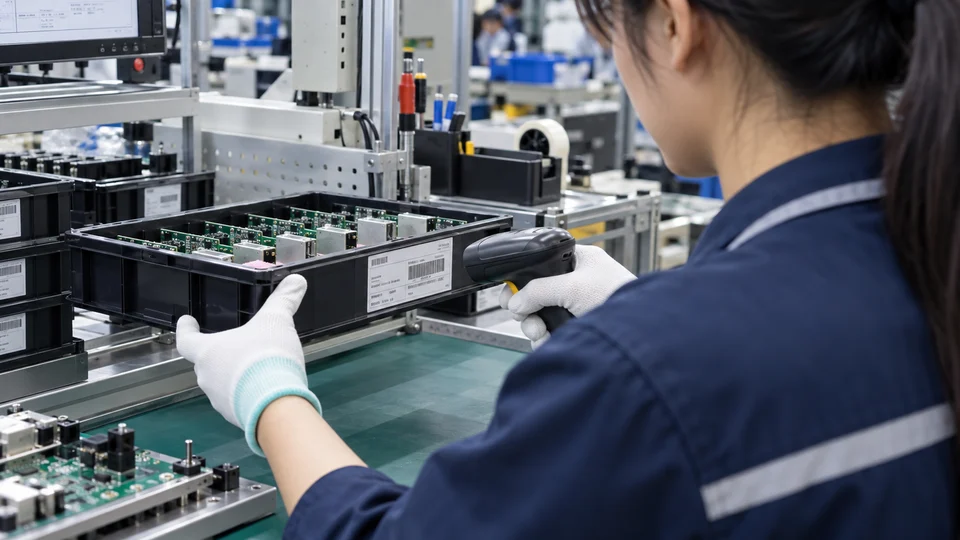
    Reflow, wave solderingPasses through the oven with the PCB, possibly more than once
    Lead-free reflow peak about 260°C, short duration
    Dedicated high-temperature material + high-temperature adhesive + the resin ribbon matched to that material.
  5. 5
    Heat treatment, furnaces, steel billetsBeyond standard film labels; please ask first
    About 300°C and above
    Please ask first.

How to choose for each temperature grade

1

Long-term heat

About 80–150°C, long-term

Typical situations at this grade

The label sits on or inside equipment that gets hot. The temperature is not very high, but the label stays there for years. For example, the housing of a running motor or transformer is hot for long periods, and the outside of an oven is constantly warm. In these cases the first thing to fail is not the material but the adhesive: day after day of heat slowly softens it so the label slides, or dries it out so it lifts, until one day the label is gone.

Common uses: where it goes and what it does

  • Nameplates and serial labels inside motors, transformers and appliances: applied at the factory and legible for the entire service life
  • Equipment housings near heat sources: asset barcodes that service staff need to scan
  • Asset labels on the outside of ovens and dryers: long-term warmth plus occasional oil splashes
  • Wire and cable reels: go into the drying room during impregnation and drying

Recommended approach

Dedicated heat-resistant material + heat-resistant adhesive + resin ribbon.

How standard labels fail

Paper yellows and turns brittle; adhesive softens and slides or dries out and lifts; wax print smears.

When requesting a quote, tell us: long-term temperature, any short-term higher temperatures, years of service, surface material, and whether it will contact oil.

2

Autoclave (steam sterilization)

About 121–134°C, steam + pressure, multiple cycles

Typical situations at this grade

Lab and factory instruments are disinfected in an autoclave: high temperature, steam and pressure, ten to twenty minutes per cycle, and the same bottle is sterilized again every week. For labels, steam is harsher than dry heat at the same temperature: paper disintegrates, and the adhesive is "steamed off" so the whole label falls to the bottom of the autoclave.

Common uses: where it goes and what it does

  • Lab glassware, reagent bottles, media bottles: after sterilization you still need to tell which bottle and which batch
  • Outer labels on sterilization packs: applied before the autoclave, scanned and logged after
  • Instrument traceability in food and biotech plants: sterilized daily, scanned daily

Recommended approach

Dedicated steam-resistant material + steam-resistant adhesive + resin ribbon.

How standard labels fail

Paper absorbs water and disintegrates; steam softens the adhesive and the whole label falls off; print is washed out by moisture.

When requesting a quote, tell us: sterilization temperature and time per cycle, how many cycles, and whether the container is glass, plastic or stainless steel.

3

Paint baking, powder coating, baking ovens

About 150–260°C, continuous for tens of minutes

Typical situations at this grade

Metal workpieces go through paint baking or powder coating: a traceability barcode is first applied to the workpiece or hanger, then everything goes into the paint oven and bakes continuously for tens of minutes. After it comes out, the barcode is scanned to confirm which batch and which customer it belongs to. The label must survive the entire bake, and sometimes it gets sprayed or covered by coating yet still has to scan after the oven.

Common uses: where it goes and what it does

  • Workpiece traceability barcodes before the paint line: applied to the workpiece and baked with it
  • Hanger and jig labels: in and out of the oven repeatedly
  • Sheet metal parts, enclosures, appliance housings, metal furniture: serial numbers must stay visible after painting for shipping
  • Bicycle frames, car and motorcycle parts: batch traceability on the coating line

Recommended approach

Dedicated high-temperature material + high-temperature adhesive + high-temperature resin ribbon.

How standard labels fail

Scorches black, shrinks and curls; adhesive carbonizes and leaves residue; print burns off and the barcode won't scan.

When requesting a quote, tell us: oven temperature and time, coating type (powder, liquid, e-coat), whether the label will be covered by coating, whether it goes on bare metal or a coated surface, and pretreatment method.

4

Reflow, wave soldering

Lead-free reflow peak about 260°C, short duration

Typical situations at this grade

The label is applied to the PCB before SMT placement, then goes through the reflow oven with the board. The peak in the oven is about 260°C, held for tens of seconds to a few minutes; double-sided boards go through twice, and the flux is then washed off with solvent. In wave soldering, the underside of the board touches the solder wave directly. The label must survive all of this, and after the oven the barcode must still scan and the print must not smear.

Common uses: where it goes and what it does

  • PCB edge serial numbers and traceability barcodes: applied before SMT placement, scanned after the oven for traceability
  • Wave-soldered boards, modules, semi-finished products: tell us first whether the label goes on the top or bottom side
  • Jig and carrier labels: through the oven repeatedly
  • Electronic component burn-in and baking (bake-out): must remain readable after long periods at high temperature

Recommended approach

Dedicated high-temperature material + high-temperature adhesive + the resin ribbon matched to that material.

How standard labels fail

Standard film shrinks and lifts; paper carbonizes; adhesive flows onto the board; print smears after flux cleaning.

When requesting a quote, tell us: reflow or wave soldering temperature profile (peak, dwell time, number of passes), top or bottom side, cleaning solvent, minimum label size, and barcode type.

5

Heat treatment, furnaces, steel billets

About 300°C and above

Typical situations at this grade

Steel billets, aluminum ingots and castings go into heat-treatment furnaces or melting furnaces at temperatures far beyond what standard film labels can withstand; adhesive labels simply burn up. This grade calls for other methods, such as hanging tags or metal markings. Please tell us your conditions first.

Common uses: where it goes and what it does

  • Batch marking for steel billets, aluminum ingots and castings
  • Heat-treatment baskets and racks

Recommended approach

Please ask first.

How standard labels fail

Standard labels simply burn up.

When requesting a quote, tell us: maximum temperature, time, whether it will contact molten metal or flame, and whether hanging tags are an option.

How we match it

A heat-resistant label is not just a sheet of paper; it is three things chosen together. Tell us your process and surface, and we will match the whole set.

Dedicated materialReflow, paint baking and long-term heat each have suitable materials.
High-temperature adhesiveNo adhesive flow or residue after high temperature; tell us first if it is bare metal or a coated surface.
Matched ribbonA high-temperature resin ribbon matched to the material, so the print is still there after the oven.

Why standard labels don't work

  • Paper labels scorch and carbonize; standard film shrinks and deforms.
  • Standard adhesive flows and lifts at high temperature, or carbonizes and leaves residue on the workpiece.
  • Print from wax and wax-resin ribbons smears or comes off at high temperature or after cleaning.

Industry applications

Find the industry closest to yours, and include the "Tell us" items when you request a quote.

1

PCB / SMT electronics assembly

Reflow and wave soldering

  • PCB edge serial numbers and traceability barcodes: applied before placement, scanned after the oven
  • Modules, semi-finished products, double-sided boards: two passes through the oven
  • Jig, carrier and tray labels: in and out of the oven repeatedly
  • Product labels after component bake-out and high-temperature burn-in
  • Rework boards: must still be readable after another pass through the oven
Conditions, recommendations and quote checklist
Conditions
Lead-free reflow peak about 260°C, possibly multiple passes; wave soldering, flux cleaning.
Recommendation
Dedicated high-temperature material (white matte or gloss) + matched resin ribbon; small sizes, high-density 2D codes.
Tell us
Temperature profile, top or bottom side, cleaning solvent, minimum size and barcode type.
2

Metalworking / paint and coating

Paint baking and coating; heat treatment and furnaces

  • Workpiece traceability barcodes: go into the oven with the part, scanned after to sort batches
  • Hanger and jig labels: in and out of the oven every day
  • Sheet metal parts, enclosures, metal furniture: serial numbers visible after painting for shipping
  • Bicycle frames, car and motorcycle parts: batch traceability on the coating line
  • Powder-coating batch numbers for aluminum windows and doors, hardware and building materials
  • Heat treatment, castings: beyond the range of film labels; please ask first
Conditions, recommendations and quote checklist
Conditions
Powder-coating or paint ovens about 150–260°C, continuous for tens of minutes.
Recommendation
Dedicated high-temperature material + high-temperature adhesive + high-temperature resin ribbon; if it must be readable after being covered by coating, tell us first.
Tell us
Oven temperature and time, coating type, bare metal or coated surface, pretreatment.
3

Wire and cable / motors / electrical machinery

Long-term heat; paint baking and coating

  • Wire reels and spools: go into the drying room during impregnation and drying
  • Nameplates and serial labels for motors, transformers and reactors
  • Circuit markings inside switchboards and control boxes
  • Internal serial numbers in electric heating appliances (ovens, rice cookers, water heaters)
  • Flag or wrap-around labels for wire harnesses and terminals
Conditions, recommendations and quote checklist
Conditions
Impregnation and drying; long-term warmth during operation.
Recommendation
Dedicated heat-resistant material + resin ribbon; flag or wrap-around type for wires.
Tell us
Wire diameter, baking temperature and time, long-term temperature, and any varnish or oil it will contact.
4

Home appliances / lighting / consumer electronics manufacturing

Long-term heat; reflow and wave soldering

  • Product serial numbers during high-temperature burn-in testing
  • Markings on LED luminaire heat sinks and drivers
  • Internal labels in power supplies and chargers
  • Body serial numbers on heat-generating appliances such as ovens, rice cookers and hair dryers
  • Component labels near heat sources inside monitors and computers
Conditions, recommendations and quote checklist
Conditions
High-temperature burn-in testing; long-term heat while the product runs.
Recommendation
Dedicated heat-resistant or high-temperature material + resin ribbon, chosen by burn-in temperature and time.
Tell us
Burn-in temperature and time, product operating temperature, years of service, label location.
5

Laboratory / factory sterilization

Steam sterilization

  • Glassware, reagent bottles, media bottles: identifiable after sterilization
  • Outer labels on sterilization packs and instrument boxes: applied before the autoclave, scanned after
  • Asset labels for culture racks and stainless steel instruments
  • Traceability for instruments sterilized daily in food and biotech plants
Conditions, recommendations and quote checklist
Conditions
Autoclave (steam sterilization), multiple cycles.
Recommendation
Dedicated steam-resistant material + resin ribbon.
Tell us
Sterilization temperature and time, number of cycles, container material.
6

Casting / forging / heat treatment

Heat treatment and furnaces; paint baking and coating

  • Batch marking for steel billets, aluminum ingots and castings
  • Hanging tags for heat-treatment baskets and racks
  • Traceability for workpieces machined or coated after leaving the furnace
  • Material batch numbers after annealing and tempering
Conditions, recommendations and quote checklist
Conditions
Heat-treatment furnaces and melting furnaces, far beyond the range of film labels.
Recommendation
Beyond the range of standard film labels. Please tell us the temperature and your method first; hanging tags or other marking methods may be needed.
Tell us
Maximum temperature, time, contact with flame or molten metal, and whether hanging tags are possible.
7

Glass / ceramics / sanitary ware kilns

Heat treatment and furnaces; paint baking and coating

  • Green body and mold numbers: marked before the kiln, matched after firing
  • Post-kiln grading and batch labels for sanitary ware and tiles
  • Sheet numbers after glass tempering and bending furnaces
  • Firing batch labels for glaze and raw material drums
Conditions, recommendations and quote checklist
Conditions
Kiln firing; post-kiln glaze finishing.
Recommendation
The kiln itself is beyond the range of film labels; please ask first. For post-kiln grading and batch numbers, use a dedicated high-temperature material.
Tell us
Whether the label is applied before or after the kiln, kiln temperature, and whether the surface is glazed or green body.
8

Rubber / plastic injection molding and vulcanization

Paint baking and coating; long-term heat

  • Mold and mold insert number labels: kept heated for long periods
  • Traceability labels for vulcanized tires and rubber parts
  • Batch and part numbers for injection-molded parts after demolding
  • Raw material labels on dryer hoppers and material bins
Conditions, recommendations and quote checklist
Conditions
Molds at high temperature for long periods; finished parts after vulcanization or baking.
Recommendation
Molds: dedicated heat-resistant material + resin ribbon; finished parts: material chosen by demolding temperature and any later baking.
Tell us
Mold temperature, whether finished parts are labeled at demolding or after cooling, and whether they contact release agent or oil.
9

Solar modules / batteries

Reflow and wave soldering; long-term heat

  • Serial labels before module lamination: go into the laminator with the module
  • Serial numbers for cell and battery pack aging tests
  • Welding/soldering traceability for junction boxes and busbars
  • Nameplates on modules exposed long-term to sun and heat outdoors
Conditions, recommendations and quote checklist
Conditions
Lamination and soldering processes; cell aging tests.
Recommendation
Dedicated high-temperature material + resin ribbon, chosen by process temperature and time.
Tell us
Lamination or aging temperature and time, label location, and sun exposure.
10

Fiberglass / composites

Paint baking and coating; long-term heat

  • Batch labels for prepreg and laminates
  • Traceability for hot-pressed parts: the label goes into the hot press with the part
  • Serial numbers for finished products after oven curing
  • Part numbers for carbon-fiber and fiberglass parts
Conditions, recommendations and quote checklist
Conditions
Hot-press molding, oven curing.
Recommendation
Dedicated high-temperature material + high-temperature adhesive + resin ribbon.
Tell us
Hot-press or curing temperature and time, and whether the label will be covered by resin.
11

Woodworking / furniture finishing

Paint baking and coating; long-term heat

  • Workpiece labels on the drying line after spray painting or paint baking
  • Order and batch numbers for panels and doors
  • Traceability labels on UV curing lines
  • Pre-shipment inspection and serial labels
Conditions, recommendations and quote checklist
Conditions
Drying line after spray painting.
Recommendation
Choose a dedicated heat-resistant or high-temperature material by drying temperature; apply in an area that is not sprayed.
Tell us
Drying temperature and time, coating type, label location.
12

Automotive and motorcycle service / engine bay

Long-term heat

  • Markings for wiring harnesses and hoses in the engine bay
  • Service labels with part replacement date and mileage
  • Identification labels for batteries and fuse boxes
  • Traceability labels for aftermarket parts and service shops
Conditions, recommendations and quote checklist
Conditions
Long-term high temperature, oil and vibration in the engine bay.
Recommendation
Dedicated heat-resistant material + oil-resistant adhesive + resin ribbon.
Tell us
Label location, oils it will contact, long-term temperature, years of service.
13

Aerospace / rail / heavy industry

Long-term heat; paint baking and coating

  • Traceability and serial labels for parts in high-temperature zones
  • Maintenance date and interval labels
  • Batch numbers for parts after coating
  • Nameplates for equipment in long-term operation
Conditions, recommendations and quote checklist
Conditions
High-temperature parts, long-term operation.
Recommendation
Choose a dedicated heat-resistant or high-temperature material by part temperature, matched as a set.
Tell us
Part temperature, time, oils or chemicals it will contact, label location.

Industry × temperature grade

IndustryLong-term heatSteam sterilizationPaint baking and coatingReflow and wave solderingHeat treatment and furnaces
PCB / SMT●
Metalworking / painting (incl. car and motorcycle parts)●○
Wire and cable / motors / electrical machinery●○
Home appliances / lighting / consumer electronics●○
Laboratory / factory sterilization●
Casting / forging / heat treatment○●
Glass / ceramics / kilns○●
Rubber / plastic injection molding and vulcanization●○
Solar modules / batteries○●
Fiberglass / composites○●
Woodworking / furniture finishing○●
Automotive and motorcycle service / engine bay●
Aerospace / rail / heavy industry●○

● Primary ○ In some cases

FAQ

If a label is rated for a certain temperature, will it survive our oven?

Not necessarily. It depends on temperature, time and number of passes, and the adhesive and ribbon must hold up too. Give us your process conditions and we will match the whole set.

Why use a matched ribbon?

A high-temperature label is a "label + ribbon" combination. With a different ribbon, the print may come off as soon as it leaves the oven. We supply the label and ribbon together.

Can a standard label handle low- to mid-temperature processes?

It depends on temperature and time. Give us your process conditions and we will judge whether a heat-resistant material is needed.

Can labels be applied to a workpiece that is already hot?

Most labels should be applied at room temperature, pressed firmly and left to rest before going into the oven. If you need to apply them to a hot surface, please tell us first.

Can the size be customized?

Yes. Size, core and outer diameter are customized to your needs and quoted by specification.

Information to include in your inquiry

  • Maximum process temperature, dwell time, number of passes (a temperature profile is even better)
  • What surface it goes on, and whether it is at room temperature or already hot when applied
  • Cleaning solvents, coatings or oils it will contact
  • Barcode type and minimum label size
  • Printer brand and model (or "haven't bought one yet")
  • Label width × height (mm), labels per roll or total quantity needed
  • What surface it goes on (carton, plastic, metal, glass, fabric…)
  • How long the label must last and what it will be exposed to (freezing, water, alcohol, sunlight, heat…)
  • Photos of the labels or ribbons you use now (if any)
All temperature-resistant labels are quoted by specification; size, core and outer diameter are customized to your needs. If you already have a spec in use, you can also enter label specs directly.

Temperature conditions

Fill in what you know; choose "Not sure" for anything you're unsure of. Your entries are carried into the quote request automatically.

High-temperature processes, low-temperature storage, or both.
High temperature: process peak.
Low temperature: lowest storage temperature.
e.g. peak 60 seconds, 20 minutes of baking, long-term frozen storage.
Count multiple oven passes and repeated thawing.
The most important field for low temperatures: whether the surface is at room temperature, or already cold or hot, when the label is applied.
Only needed for liquid nitrogen use.
What the label goes on.
Small tube curves lift most easily; please enter the diameter.
You can list several.
2D codes fit more easily on small labels.
Size and core are customized to your needs.
For temperature-resistant labels, we recommend the matched ribbon.
Your specs
(Nothing entered yet)

Ask about supplies: heat-resistant labels

Or call us at 02-2886-6633, or add us on LINE.

Other applications

Test site · content under review